flask-online-shop
Flask Online Shop
A demo of an online shop: nine planet-themed products, sign-up, login, and checkout through Stripe, the payment service, in practice mode, so no real money moves. The point was building every piece a real store needs, including scrambling stored passwords. Two bugs turned up: a login that would have let anybody into anybody else's account once a second person registered, and a displayed price the checkout would not have charged.
Solo work by our founder, Salman Adnan.
Overview
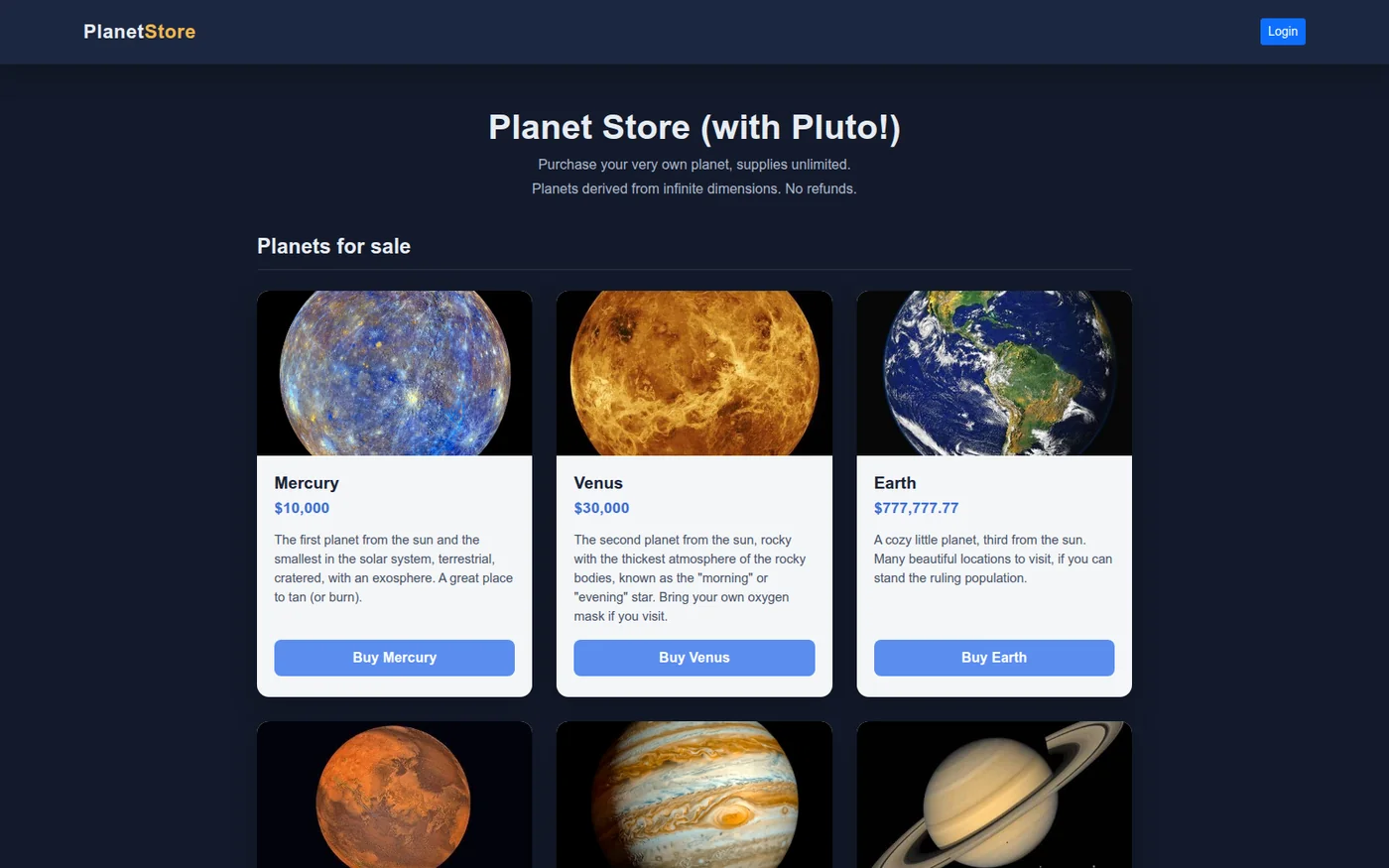
A small e-commerce demo built with Flask: browse a nine-planet product catalog, create an account, log in, and pay through Stripe Checkout in test mode.
Key features
- Product cards (image, name, price, description, "Buy" button) rendered from a single planet catalog, nine in total, looped from one Jinja list instead of nine copy-pasted markup blocks.
- A shared header/nav on every page that reflects the actual session state, plus a consistent dark/light color scheme across the storefront, auth pages, and result pages.
- Login and registration pages styled as a single card with inline validation error messages for a wrong password, an unknown email, or mismatched passwords on signup.
- Account creation and login with bcrypt-hashed passwords stored in SQLite.
- Stripe Checkout session creation per purchase, with distinct success and cancel pages.
- The displayed price for every planet is derived from the same dict sent to Stripe, so the two numbers can't drift apart.
Verification
The app installs cleanly in a fresh virtualenv and boots with the Flask dev server. GET / returns HTTP 200 and renders nine product cards. A full register-then-login-then-logout flow was driven end to end with a requests session against the running server, including the wrong-password and unregistered-email error paths. POST /create-checkout-session was hit directly and reaches Stripe's API, failing only on the missing key, which confirms the route is wired correctly up to the point a real key is required. A full Stripe payment end to end was not verified here since that needs a real test-mode secret key this environment doesn't have.